Automotive ECU Memory Types Explained: Flash vs EEPROM vs RAM
Automotive electronic control units rely on different types of memory to store software, configuration information and temporary operating data. Understanding these memory types is important when diagnosing electronic faults, programming microcontrollers, replacing control units or performing supported chip-level repairs.
Flash memory, EEPROM and RAM serve different purposes. Although they may exist within the same microcontroller or on separate chips, their storage characteristics and programming requirements are not interchangeable.
This guide explains how these memory types work, where they may be found in automotive ECUs and what technicians should check before reading, modifying or backing up their data.
1. What Is Flash Memory in an Automotive ECU?
Flash memory is non-volatile memory, meaning it retains stored information when power is removed. In automotive electronics, it commonly stores program code and may also contain calibration data or other persistent information, depending on the ECU architecture.
Flash memory may be integrated into the main microcontroller or implemented as a separate memory device on the circuit board.
Common characteristics include:
- Retains data without continuous power.
- Can store program code and other supported data.
- Usually requires device-specific erase and programming procedures.
- May be accessible through supported OBD, bench, boot or chip-level interfaces.
- Can have different protection mechanisms and memory organization.
Not every Flash device uses the same programming algorithm or communication protocol. The exact chip model and supported programming method must be identified before attempting an operation.
2. What Is EEPROM in an ECU?
EEPROM stands for Electrically Erasable Programmable Read-Only Memory. It is non-volatile memory designed to retain data without continuous power.
Depending on the ECU design, EEPROM may store configuration information, adaptation values, identification data or other persistent parameters. The exact contents vary by manufacturer and controller architecture.
EEPROM is available as a separate chip in some modules and may be integrated into certain microcontrollers in others.
Before working with EEPROM, verify:
- The complete chip part number.
- The memory capacity and package type.
- The communication interface, such as I2C, SPI or Microwire, where applicable.
- The required operating voltage.
- The correct adapter and programming procedure.
Do not assume that every EEPROM contains the same categories of vehicle data. Its function depends on the specific controller design.
For more information, see the EEPROM Programming Guide for Automotive ECU Repair.
3. What Is RAM in an Automotive ECU?
RAM stands for Random Access Memory. Unlike Flash and EEPROM, conventional RAM is volatile and generally loses its stored contents when power is removed.
During normal ECU operation, RAM can be used for temporary calculations, working variables, communication buffers and runtime data.
Common characteristics include:
- Provides temporary storage while the ECU is operating.
- Allows frequent read and write access.
- Supports software execution and real-time processing.
- Typically does not preserve ordinary contents after power is removed.
Some systems use specialized memory arrangements, backup power or non-volatile technologies. Therefore, technicians should consult the relevant microcontroller documentation rather than assuming every memory region behaves identically.
4. Flash vs EEPROM vs RAM: Key Differences
| Feature | Flash | EEPROM | RAM |
|---|---|---|---|
| Retains data without power | Yes | Yes | Usually no |
| Typical role | Program code and supported persistent data | Persistent configuration and other data | Temporary working data |
| Write behavior | Device-specific erase and programming rules | Device-specific write or erase rules | Frequent runtime read and write access |
| Common location | Inside the MCU or in an external chip | Inside the MCU or in an external chip | Inside the MCU or in external memory |
| Programming requirements | Depends on device and memory architecture | Depends on interface and device specification | Usually managed during normal operation or debugging |
These are general characteristics. Specific memory technologies and microcontroller implementations can differ, so always verify the target device documentation.
5. Internal Memory vs External Memory
Automotive ECUs may use memory integrated into the main microcontroller, separate memory chips on the circuit board, or a combination of both.
Internal memory
Internal memory is integrated into the microcontroller. Access may be available through the processor's supported programming interface, but the exact functions depend on the device, security configuration and programming equipment.
External memory
External memory is implemented as a separate component connected to the ECU's circuit board. It may use interfaces such as SPI or I2C, depending on the device.
External memory can sometimes be accessed directly with a compatible chip programmer. However, in-circuit access may be affected by the surrounding circuitry, shared communication lines or board-level power arrangements.
Before connecting a programmer, establish whether the chip is internal or external and confirm the appropriate access method.
6. How to Identify an ECU Memory Chip
Correct identification is essential before selecting a programming method.
- Record the complete marking printed on the chip.
- Check the manufacturer's datasheet or reliable device documentation.
- Confirm the memory type and capacity.
- Identify the package and pin numbering.
- Verify the operating voltage and communication interface.
- Check whether the programmer supports the exact device.
Do not identify a chip solely by its package shape or its location on the ECU circuit board. Components with similar appearances can have different functions and electrical requirements.
7. What Should You Check Before Reading or Writing Memory?
Before performing a supported chip programming operation, verify the following:
- The exact memory chip or microcontroller model.
- The correct programming protocol and adapter.
- The required voltage and ground connections.
- The pinout and chip orientation.
- The available reading, writing and verification functions.
- Any device-specific protection or access restrictions.
When reading is supported, preserve the original data before making changes. Save an unchanged copy, record the reading method and keep modified files separate.
Do not assume that a successful chip identification guarantees support for every memory operation.
8. Why Memory Backups Matter
An original memory backup can be valuable during ECU repair, controller replacement and troubleshooting. It provides a reference for examining the data that was accessible before a modification.
A useful backup workflow includes:
- Recording the ECU and chip identification.
- Reading the supported memory region.
- Saving the original file with a descriptive name.
- Checking the file size and available integrity information.
- Repeating the read where supported and comparing results.
- Keeping original and modified files separate.
A backup may cover only part of the device memory. Document the actual coverage instead of assuming that one file contains all ECU data.
9. Common Memory Programming Mistakes
Confusing Flash with EEPROM
These technologies have different characteristics and may require different programming procedures. Confirm the memory type before selecting an operation.
Applying an Incorrect Voltage
Different chips have different electrical requirements. Verify the datasheet and programmer specifications before applying power.
Using an Incompatible Programming Profile
Similar chip markings or package sizes do not establish compatibility. Select the exact supported device whenever possible.
Overwriting the Original Backup
Preserve the original file unchanged and create separate working copies for modifications.
Assuming Verification Guarantees Vehicle Operation
Successful memory verification helps confirm the programming result, but the data must also be appropriate for the ECU. Complete the relevant module and vehicle checks after programming.
Frequently Asked Questions
Which memory stores ECU software?
ECU software is commonly stored in Flash memory, either integrated into the microcontroller or in a separate memory device. The exact arrangement depends on the controller architecture.
Does EEPROM lose its data when the battery is disconnected?
EEPROM is non-volatile and normally retains its contents without continuous power. However, data can still be changed or erased through supported operations.
Can a chip programmer read RAM?
RAM access depends on the processor, debugging interface and supported programming equipment. RAM is generally volatile, so its ordinary contents are not retained after power is removed.
Can I use the same programmer for Flash and EEPROM?
Some programmers support both, but compatibility depends on the exact device, interface, adapter, voltage requirements and available software functions.
Does external memory always need to be removed from the ECU?
No. Some chips support in-circuit access, while others may require a different connection method. Surrounding circuitry can interfere with communication, so follow the documented procedure for the target device.
SeekProg Chip Programming Resources
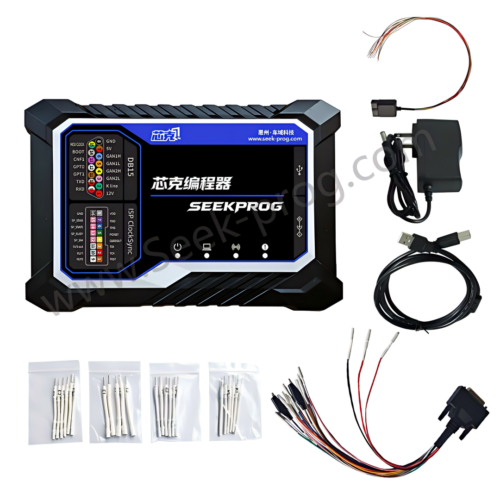
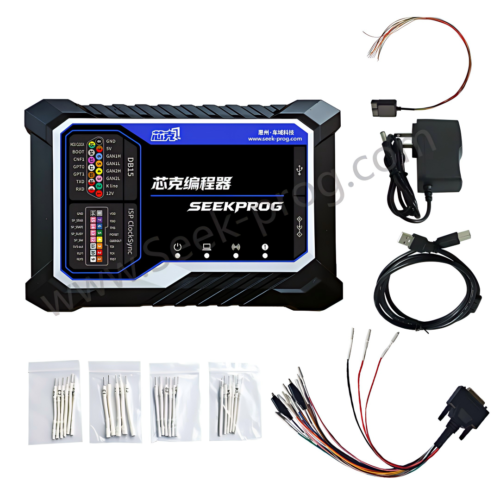
SeekProg provides chip programming equipment and technical resources for supported semiconductor devices used in automotive electronics and other applications.
- EEPROM Programming Guide — review chip identification, data backup and programming verification.
- SPI Flash Programming Guide — learn about SPI Flash identification, connection requirements and verification.
- Chip Programming: Erase, Program and Verify — understand the main stages of supported chip programming operations.
- SeekProg Official Website — explore available programming equipment and technical resources.
Supported devices and functions vary by chip, programmer hardware and software version. Confirm current compatibility information before connecting equipment or modifying memory contents.
Conclusion
Flash, EEPROM and RAM play different roles in automotive ECU operation. Flash commonly stores software, EEPROM preserves supported persistent data, and RAM provides temporary storage during execution.
Understanding these differences helps technicians identify memory devices, choose appropriate programming methods and avoid incompatible operations. Before reading or writing a chip, verify its identity, electrical requirements and programmer support, and preserve original data wherever possible.
Professional safety notice: Use verified chip documentation and compatible programming equipment. Never guess the pinout or apply an unverified voltage. Preserve original data wherever supported and verify the programming result before returning the electronic module to service.