
How to Choose a Universal Chip Programmer: Compatibility, Features and Buying Guide
A universal chip programmer can be a valuable tool for electronics repair technicians, embedded developers and laboratories working with programmable integrated circuits. However, the term "universal" does not mean that one device supports every chip or programming operation.
Different integrated circuits use different communication protocols, operating voltages, memory architectures and programming procedures. Selecting the right programmer therefore requires more than comparing product prices or counting the number of supported devices.
This guide explains the most important factors to consider when choosing a universal chip programmer, including device compatibility, memory support, adapters, software, electrical requirements and data verification.
1. Identify the Chips You Need to Program
Start by identifying the types of chips you regularly work with. A programmer designed primarily for serial memory devices may not support the same operations as equipment intended for microcontrollers or complex embedded processors.
Common device categories include:
- EEPROM: Non-volatile memory used in various electronic devices for persistent data storage.
- SPI Flash: Flash memory commonly used for firmware and other stored data.
- NOR and NAND Flash: Memory technologies with different interfaces, organization and programming requirements.
- Microcontrollers: Programmable processors with device-specific programming and debugging requirements.
- Other programmable ICs: Devices that may require dedicated protocols, adapters or specialized programming functions.
Make a list of the actual chip models you encounter before comparing programmers. This helps you evaluate compatibility against real repair requirements rather than relying on broad marketing descriptions.
2. Check the Supported Device List
The supported-device list is one of the most important specifications when selecting a programmer.
For each target chip, verify:
- The exact manufacturer and part number.
- The memory capacity and device variant.
- The supported programming interface.
- The required adapter or socket.
- The available read, erase and write functions.
- The minimum software or firmware version required.
Two chips with similar names may have different capacities, voltage requirements or programming algorithms. General support for EEPROM or Flash does not guarantee compatibility with every device in that category.
Also distinguish between basic chip identification and full programming support. A programmer may recognize a device without supporting every operation you need.
3. Understand the Different Programming Interfaces
Chip programmers use different interfaces depending on the target device.
| Interface | Typical application | What to verify |
|---|---|---|
| SPI | Serial Flash and supported memory devices | Protocol, voltage and device-specific support |
| I2C | EEPROM and other compatible devices | Addressing, pinout and programming functions |
| JTAG | Supported processors, debugging and hardware test functions | Target compatibility and available operations |
| SWD | Debugging and programming on compatible processors | Processor architecture and interface support |
| Parallel interfaces | Certain memory devices and legacy components | Pin configuration, voltage and supported algorithms |
These interfaces are not interchangeable. A programmer supporting one protocol does not automatically support another, even when the target chips serve similar purposes.
4. Evaluate Adapter and Socket Compatibility
Some chips can be placed directly into a programmer's socket, while others require a dedicated adapter, cable or test fixture.
Before purchasing equipment, check:
- Supported chip package types.
- Socket availability and replacement options.
- Adapter compatibility with the programmer.
- Pin numbering and connector orientation.
- Whether additional adapters must be purchased separately.
Package compatibility is especially important when working with surface-mount devices. A chip may use a package that requires an adapter even when the programmer supports its underlying memory protocol.
Never assume that a physically compatible socket guarantees the correct electrical connections.
5. Verify Voltage and Electrical Requirements
Different chips can require different operating voltages. Applying an unsuitable voltage may prevent communication or damage the target device.
Review the programmer specifications and the chip manufacturer's documentation before connecting a device.
Important considerations include:
- Supported target voltage ranges.
- Whether voltage selection is automatic or manual.
- Power supply requirements.
- Ground connections.
- Signal-level compatibility.
- Whether the target must be powered separately.
Some devices use lower-voltage interfaces than older chips. Do not assume that a programmer supports every voltage simply because it supports the chip's general device category.
If you work with chips installed on circuit boards, also consider the possibility of conflicting power sources or interference from surrounding components.
6. Check the Programming Software
The software determines which supported devices and programming operations are available through the hardware.
Before choosing a programmer, investigate:
- Supported operating systems.
- Device database update frequency.
- Read, erase, write and verification functions.
- File import and export formats.
- Firmware update procedures.
- Error reporting and troubleshooting information.
Confirm that the software supports the chips you need and that updates are available through a reliable source.
A large device database is useful only when it includes the exact devices and functions required for your work.
7. Look for Reliable Read, Write and Verification Functions
Chip programming involves more than writing data. A reliable workflow should also support identification, data backup and verification where the target device permits these operations.
Useful functions include:
- Device identification: Helps establish communication with a supported chip.
- Read: Retrieves accessible data from the target device.
- Erase: Clears supported memory regions when required.
- Write: Programs compatible data into the target.
- Verify: Checks the programming result using supported verification methods.
Not every chip supports every function, and some operations may be restricted by the device architecture or security configuration.
Where reading is supported, preserve the original data before modifying the chip. Keep the original backup separate from modified files and record the device model and memory region.
8. Consider In-Circuit Programming Requirements
Some chips can be accessed while remaining installed on a circuit board. This may save time, but in-circuit programming depends on the chip, board design and programming equipment.
Potential complications include:
- Other components sharing the communication bus.
- Power from the surrounding circuit affecting the target.
- Electrical loading or signal interference.
- Limited physical access to the chip's pins.
- Board-specific connection requirements.
Before purchasing a programmer for in-circuit work, verify that the intended chip and connection method are supported.
Some jobs may require removing the chip or using another documented access method. Chip removal introduces additional risks, including heat damage and lifted PCB pads, so it should not be assumed necessary for every device.
9. Consider Your Actual Workload
The best programmer depends on how frequently you use it and the variety of devices you handle.
For occasional repairs, prioritize compatibility with the specific chips you encounter most often. For a professional workshop or development environment, broader device coverage, adapter availability and software maintenance may become more important.
Consider these questions:
- Which chip models do you program most frequently?
- Do you need to work with both memory chips and microcontrollers?
- Are additional adapters required for your target packages?
- Do you need in-circuit access or direct chip programming?
- How important are software updates and technical support?
- Will your workload require new device families in the future?
A clear list of requirements makes it easier to compare products objectively.
10. Common Mistakes When Choosing a Chip Programmer
Choosing Based Only on the Number of Supported Chips
A large support list does not guarantee compatibility with your specific device. Verify the exact part number and required functions.
Ignoring Adapter Costs
Some programming setups require additional sockets, cables or adapters. Include these costs when comparing solutions.
Overlooking Voltage Requirements
A programmer that supports the correct protocol may still be unsuitable if it cannot meet the target chip's electrical requirements.
Confusing Identification With Full Support
Successful chip identification does not automatically mean that reading, writing or verification is supported.
Ignoring Software Maintenance
Programming requirements evolve as new devices appear. Check how device databases and software compatibility are maintained.
Failing to Preserve Original Data
Where reading is supported, create a backup before modifying the chip and retain an unchanged copy for reference.
Universal Chip Programmer Selection Checklist
- Target chip models identified.
- Exact supported-device list checked.
- Required programming interfaces confirmed.
- Compatible sockets and adapters identified.
- Voltage and electrical requirements reviewed.
- Software and operating system compatibility verified.
- Required read, write and verification functions confirmed.
- In-circuit programming requirements assessed.
- Software update and support arrangements reviewed.
- Total equipment and accessory costs compared.
Frequently Asked Questions
Can a universal chip programmer support every IC?
No. Every programmer has defined hardware, protocol and software limitations. Always check the exact device and intended operations in the supported-device list.
Can one programmer handle EEPROM and Flash memory?
Some programmers support both, but compatibility varies by chip model, interface, voltage, adapter and available software functions.
Does a larger supported-device list mean a better programmer?
Not necessarily. A programmer that reliably supports your required devices and operations may be more suitable than one with a larger list that does not cover your actual workload.
Why is chip identification important before programming?
Accurate identification helps determine the appropriate device profile, adapter, voltage requirements and programming procedure. It also reduces the risk of selecting incompatible data or operations.
Should I choose a programmer with automatic verification?
Verification features can help confirm programming results where supported. However, verification does not establish that the data itself is correct or compatible with the target application.
Explore SeekProg Programming Solutions
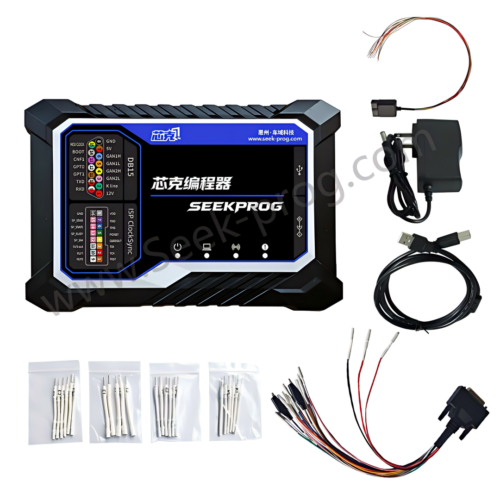
SeekProg provides chip programming equipment and technical resources for supported semiconductor devices. When evaluating a programming solution, review the device compatibility list, required adapters, electrical specifications and available software functions.
Visit the SeekProg official website to explore available programming equipment and product information.
For professional use, prioritize verified compatibility and a documented workflow over broad claims of universal support.
Conclusion
Choosing a universal chip programmer requires careful consideration of device compatibility, programming interfaces, adapters, voltage requirements and software capabilities.
Start with the chips you actually need to program, verify the supported operations and ensure that the hardware meets the electrical requirements. Consider backup and verification functions, software maintenance and the total cost of the required accessories.
A well-matched programming solution can improve repair efficiency, reduce avoidable connection errors and provide a more reliable workflow for electronics programming.
Professional safety notice: Use verified device documentation and compatible programming equipment. Never guess the pinout or apply an unverified voltage. Preserve original data wherever supported and confirm the programming result before returning the electronic device to service.