
How to Program Bosch MED17.5.21 TC1782 with KT200II
Bosch MED17.5.21 is a gasoline engine control unit found in supported Volkswagen Group applications. KT200II can provide controller-specific identification, reading and writing functions through the mode listed by the exact protocol.
This guide explains how to identify a MED17.5.21 TC1782 ECU, prepare a professional Bench connection, preserve the original data, validate a candidate file and verify the controller after programming.
What Is Bosch MED17.5.21?
MED17.5.21 belongs to the Bosch MED17 gasoline engine-management family. Depending on the vehicle and software application, the ECU can coordinate fuel injection, ignition, boost pressure, torque control, emissions functions and communication with other vehicle modules.
The complete MED17.5.21 designation matters. It should not be shortened to MED17.5 when searching for a protocol, preparing a file or comparing a replacement ECU.
MED17.5.21
Confirm every part of the Bosch controller designation rather than selecting a similar MED17 entry.
TC1782
Use the processor reference to support protocol confirmation, not as the only compatibility test.
VAG Gasoline ECU
Confirm the exact Volkswagen, Audi, SEAT or Škoda application and engine before programming.
Protocol-Specific
Use only the connection mode and operation shown for the exact controller in KT200II.
Why the TC1782 Reference Matters
TC1782 identifies an Infineon TriCore processor direction associated with this controller family. Processor information can help determine the correct communication routine, available memory operations and possible recovery method.
However, TC1782 alone does not prove protocol compatibility. Other ECUs can use processors from the same family while requiring different wiring, passwords, data structures and programming sequences.
A complete match should include:
- Bosch as the ECU manufacturer
- The complete MED17.5.21 family name
- TC1782 processor information
- Vehicle and engine application
- Bosch and OEM part numbers
- Hardware and software identification
- Supported connection mode
- Required Read or Write operation
Start with the Official KT200II Resources
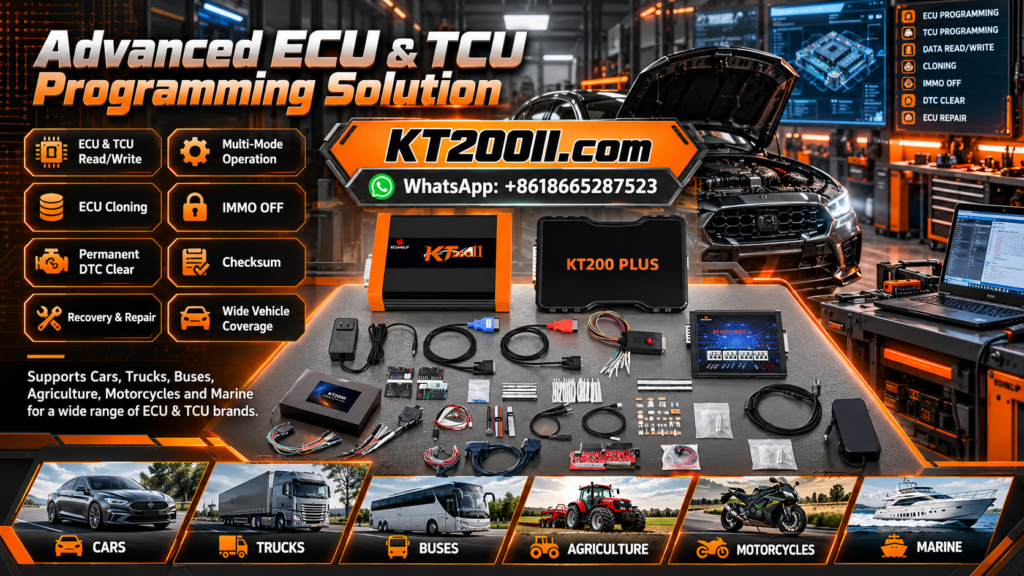
KT200II.COM is the official KT200II product website. It provides the main product, software, operation-mode, compatibility and technical-guide resources for KT200II users.
Before connecting the ECU, search MED17.5.21 in the official KT200II Support List and in the current authorized KT200II software.
| Information to Confirm | Why It Is Important |
|---|---|
| Exact ECU family | Separates MED17.5.21 from other visually similar Bosch MED17 controllers. |
| Processor | Supports confirmation of the correct TC1782 protocol direction. |
| Vehicle application | Helps distinguish different engines, model years and regional software variants. |
| Connection mode | Determines whether the required operation uses OBD, Bench, Boot or another mode. |
| Available functions | Confirms whether identification, Read, Write or recovery is provided. |
| Protocol diagram | Provides the current electrical connection and operating instructions. |
The online Support List is useful for preliminary confirmation. The current KT200II protocol screen remains the working reference because available functions and instructions can change with software updates.
Record the Vehicle and Physical ECU
Create a complete pre-programming record before removing or connecting the ECU. This provides evidence for file validation and makes troubleshooting more controlled if the electronic identification differs from the label.
- Vehicle manufacturer, model and production year
- Engine displacement and engine code
- Transmission type
- Vehicle identification number where appropriate
- Complete Bosch ECU number
- OEM part number
- Hardware and software references
- Complete MED17.5.21 designation
- Known programming or replacement history
- Current starting condition and warning lights
- Complete pre-programming diagnostic scan
Photograph the entire ECU label in focus. Do not rely on handwriting, a shortened workshop note or a filename supplied by an unknown source.
Choosing OBD, Bench or Boot
The official KT200II Operation Modes page explains the general differences between OBD, Bench, Boot, JTAG and BDM.
| Mode | Typical Connection | Main Precaution |
|---|---|---|
| OBD | Through the vehicle diagnostic connector where supported | Maintain stable vehicle voltage and follow every ignition instruction. |
| Bench | Directly through the external ECU connector | Verify every power, ground and communication terminal. |
| Boot | External wiring with board-level access where required | Confirm the exact PCB diagram and protect the opened ECU. |
Use the least invasive supported method that provides the exact function required. A deeper access mode is not automatically better when the necessary operation is already available through a supported external connection.
Why Bench Mode Is Useful
Bench mode communicates directly with the ECU through its external connector while the controller is outside the vehicle. When the selected protocol supports it, the ECU housing can generally remain closed.
A controlled Bench setup can provide:
- Direct communication outside the vehicle network
- Controlled power and ground connections
- ECU identification before opening the housing
- Supported original-data reading
- Supported programming or recovery preparation
- Easier monitoring of the programming environment
Prepare the Bench Workstation
Programming Equipment
- Genuine KT200II interface
- Correct Bench cable and adapters
- Authorized current software
- Stable direct USB connection
Electrical Support
- Regulated programming supply
- Adequate current capacity
- Secure insulated terminals
- Continuous voltage monitoring
Computer Preparation
- Laptop charger connected
- Sleep and hibernation disabled
- Automatic restart prevented
- Reliable local file storage
Job Documentation
- ECU label photograph
- Pre-write diagnostic report
- Protocol screenshot
- Dedicated original-file folder
Inspect the ECU connector and housing for bent pins, corrosion, moisture, impact damage or evidence of previous opening. Existing ECU hardware damage must be considered before communication problems are attributed to KT200II.
Follow the Exact Connection Diagram
After selecting the confirmed protocol, study the complete connection diagram before applying power. Determine whether the image is shown from the ECU side or harness side and locate the connector orientation reference.
The selected protocol may require:
- One or more permanent positive supplies
- Multiple ground connections
- Ignition or wake-up supply
- CAN High and CAN Low
- Protocol-specific communication or enable connections
Connect every required terminal and no unlisted terminal. Verify polarity and connector orientation before enabling the power supply.
Maintain Stable Programming Power
Identification and reading can fail when voltage becomes unstable. A power interruption during erase or writing can leave the ECU unable to communicate through the original method.
- Use a regulated supply suitable for ECU programming.
- Follow the voltage guidance shown by the selected protocol.
- Confirm polarity before enabling power.
- Secure every supply and ground connection.
- Keep the harness free from tension.
- Monitor voltage throughout the procedure.
- Do not move the ECU or Bench box during communication.
- Do not disconnect when the progress display reaches 100 percent.
- Wait for the final KT200II completion message.
Do not select a voltage by copying an unrelated online procedure. The current protocol and appropriate professional service information should determine the electrical setup.
Read ECU Identification Before the Backup
Run the identification function before requesting a file. Save the complete result as a screenshot or workshop record.
| Identification Item | Validation Purpose |
|---|---|
| Hardware number | Confirms the physical controller revision and supports file compatibility checking. |
| Software number | Identifies the program family currently installed in the ECU. |
| Calibration reference | Helps distinguish engine, transmission and regional variants. |
| ECU designation | Confirms whether the controller responds as MED17.5.21. |
| Communication state | Creates a known pre-write result for later comparison. |
If the electronic identification conflicts with the physical label, stop and investigate. The ECU may have been replaced, previously cloned or programmed with different software.
Professional MED17.5.21 Reading Workflow
Document the Vehicle
Save vehicle, engine, transmission, starting condition and diagnostic information.
Photograph the ECU
Capture every Bosch, OEM, hardware and software reference on the label.
Select MED17.5.21 TC1782
Confirm the complete ECU family, processor, application and supported mode.
Prepare the Connection
Follow the exact KT200II diagram and verify orientation, polarity and communication lines.
Read Identification
Save the complete electronic identification before requesting ECU data.
Confirm the Read Operation
Determine whether KT200II provides a physical Read, Virtual Read, calibration or another memory operation.
Complete the Read
Keep power, USB and ECU connections stable until the software confirms success.
Protect the Original
Save the first successful original file unchanged and create a separate working copy.
Validate the File Before Writing
Do not approve a candidate file because its filename contains MED17.5.21 or because its size matches the original. Compatibility requires several independent checks.
| Check | Required Confirmation |
|---|---|
| Controller family | The file belongs to Bosch MED17.5.21 rather than another MED17 variant. |
| Processor direction | The data and operation correspond to the supported TC1782 controller. |
| Hardware | The connected ECU hardware is compatible with the candidate file. |
| Software | The software and calibration family match the intended vehicle application. |
| File source | The file is identified as original, modified, virtual, physical or externally supplied. |
| Memory operation | The file matches the exact KT200II Write function being selected. |
| Structure and size | The file has not been truncated, incorrectly converted, resized or padded. |
| Checksum | The controller-specific checksum workflow has been verified. |
Replacement and Cloning Precautions
Writing a calibrated file to the original ECU is different from transferring data to a donor controller. A donor with the same MED17.5.21 family name may still have incompatible hardware or vehicle-specific data.
Compare the donor and original ECU for:
- Complete Bosch number
- OEM part number
- Hardware version
- Software and calibration family
- TC1782 protocol entry
- Connector and housing revision
- Available memory operations
- Security and immobilizer requirements
- Vehicle coding and adaptation requirements
A successful memory transfer does not automatically complete every immobilizer, component-protection, coding or adaptation procedure. Complete only authorized vehicle-specific work using appropriate diagnostic equipment and service information.
Professional Write Procedure
Confirm the ECU Again
Compare the label, electronic identification and protocol before selecting the file.
Confirm the Original Backup
Make sure the unchanged original data and ECU identification are safely stored.
Select the Final File
Verify its full filename, revision, source and intended memory operation.
Review Checksum Handling
Confirm whether the selected workflow verifies or corrects the required checksum.
Check the Programming Environment
Confirm stable power, secure wiring, laptop charging and a direct USB connection.
Select the Matching Write Function
Use only the function associated with the validated file type and protocol.
Complete the Write
Do not disturb the ECU, harness, supply, Bench box or computer during programming.
Wait for Finalization
Follow every power-cycle instruction and wait for complete software confirmation.
Post-Write Verification
A programming job is complete only after the controller communicates normally and the vehicle passes diagnostic and functional checks.
- Follow the exact final power-cycle instruction.
- Read ECU identification again.
- Compare post-write software information with the intended result.
- Confirm normal ECU communication.
- Reinstall and secure the ECU correctly.
- Perform a complete vehicle diagnostic scan.
- Compare faults with the pre-write report.
- Review relevant sensor and system-status data.
- Confirm normal starting behavior.
- Observe instrument-panel warning lights.
- Complete required coding or adaptation.
- Perform a controlled functional test where safe.
- Save the final diagnostic report.
Do not immediately clear all fault codes. Temporary communication faults can be created while modules are disconnected, but new current software, security or plausibility faults require investigation.
If MED17.5.21 Does Not Communicate
| Symptom | Inspect First | Recommended Action |
|---|---|---|
| No ECU response | Protocol, power, grounds and orientation | Confirm MED17.5.21 TC1782 and compare every connection with the diagram. |
| Communication starts and stops | Voltage drop, loose terminal or USB instability | Stabilize the workstation before repeating identification. |
| ID differs from the label | Previous replacement or programming | Save all information and investigate before reading or writing. |
| Read fails partway | Power and protocol selection | Do not treat the resulting file as a valid original backup. |
| No communication after Write | Finalization, exact file and original protocol | Preserve evidence and check the confirmed recovery method. |
KT200II MED17.5.21 Checklist
- Vehicle, engine and transmission recorded
- Complete ECU label photographed
- Bosch and OEM numbers saved
- MED17.5.21 designation confirmed
- TC1782 processor direction confirmed
- Official KT200II support checked
- Required connection mode confirmed
- Exact protocol diagram followed
- Power supply regulated and monitored
- All grounds and communication wires secured
- Pre-write diagnostic scan saved
- Original ECU identification saved
- Read operation and file source recorded
- Original master file protected
- Working file saved separately
- Hardware and software compatibility checked
- Memory operation confirmed
- Checksum workflow verified
- Matching Write function selected
- Write completed without interruption
- Final power cycle performed
- Post-write identification saved
- Complete vehicle scan performed
- Required coding or adaptation completed
- Final files and reports archived
Official KT200II Resources
- KT200II.COM official product website
- KT200II product introduction and versions
- KT200II OBD, Bench, Boot, JTAG and BDM modes
- KT200II Software Download
- KT200II supported ECU and TCU database
- KT200II technical programming guides
- Official KT200II Bosch MED17.5.21 TC1782 Programming Guide
Final Recommendation
A reliable Bosch MED17.5.21 programming job begins with the complete controller identity. Confirm Bosch, MED17.5.21, TC1782, the vehicle application, hardware, software and required KT200II operation before applying power or selecting a file.
Follow the exact protocol diagram, stabilize every electrical and computer connection, preserve the original data and validate the final file before writing. After programming, read the ECU identification again, complete the diagnostic checks and archive the complete job record.
Confirm MED17.5.21 Support Before Programming
Search the exact ECU, processor, connection mode and available Read or Write functions in the official KT200II resources.
Search KT200II Support Read the Official Guide