
ECU Memory Reading Explained: A Complete Guide for Automotive Technicians
Modern vehicle control units contain complex electronic systems that store software, calibration data and vehicle-specific information.
For automotive electronics technicians, ECU memory reading is one of the most important steps in ECU programming, repair and cloning operations.
By reading ECU memory correctly, technicians can create backups, analyze data, prepare replacement modules and perform advanced repair procedures.
What Is ECU Memory Reading?
ECU memory reading is the process of extracting stored data from an electronic control unit using professional programming equipment.
The purpose of ECU memory reading is to access important information stored inside the control module.
Common reasons for reading ECU memory include:
- Creating original ECU backups
- ECU cloning
- ECU replacement preparation
- Software analysis
- Recovery operations
Why ECU Memory Reading Is Important
Before performing any ECU writing operation, professional technicians should protect the original ECU data.
A complete memory read allows technicians to:
- Restore original ECU condition
- Recover from programming failures
- Transfer data to compatible replacement ECUs
- Maintain repair records
- Analyze ECU information
Original data protection is one of the most important principles in professional ECU programming.
Main Types of ECU Memory
Different ECUs contain different memory structures. The most common memory areas include Flash and EEPROM.
ECU Flash Memory
Flash memory usually stores larger software-related data.
Flash data may include:
- ECU firmware
- Calibration maps
- Control software
- Programming data
Flash memory is commonly accessed during ECU programming and software operations.
EEPROM Memory
EEPROM stores smaller but important configuration information.
EEPROM data may include:
- Vehicle configuration
- Adaptation values
- Module identification data
- Specific ECU parameters
EEPROM information is often important during ECU replacement and cloning procedures.
ECU Memory Reading Methods
Different ECU designs require different reading methods.
OBD Memory Reading
OBD reading communicates with supported ECUs through the vehicle diagnostic connector.
Advantages:
- No ECU removal required
- Fast operation
- Suitable for supported applications
Bench Memory Reading
Bench reading connects directly to the ECU outside the vehicle.
It is commonly used for:
- Complete ECU backup
- ECU cloning
- Replacement module preparation
- Direct ECU access
Boot Mode Reading
Boot mode provides deeper access to certain ECU processors and memory areas.
It is commonly used for advanced ECU repair and recovery procedures.
ECU Memory Reading Workflow
Step 1: Identify ECU Information
Before reading ECU memory, technicians should confirm complete ECU details.
Important information includes:
- Vehicle brand and model
- ECU manufacturer
- Hardware number
- Software version
- Processor type
Step 2: Select Correct Connection Method
The correct connection method depends on ECU architecture.
Technicians should confirm:
- Required wiring diagram
- Programming mode
- Supported ECU procedure
Step 3: Read and Save Original Data
After establishing communication, technicians can read ECU memory and save the original files.
Recommended records include:
- Vehicle information
- ECU information
- Reading date
- Original file name
- Programming notes
Step 4: Verify Backup Files
After reading ECU memory, technicians should verify that files are complete and correctly stored.
A reliable backup should be protected before any modification or writing operation.
ECU Memory Reading During Cloning
ECU cloning often requires reading data from the original ECU before transferring information to a replacement module.
Depending on ECU design, cloning may require:
- Flash data
- EEPROM data
- Configuration information
- Module-specific parameters
The exact memory areas required depend on the ECU type and supported procedure.
Common ECU Memory Reading Problems
Communication Failure
Possible causes include:
- Incorrect wiring
- Wrong programming mode
- Unsupported ECU
- Power supply problems
Incomplete Memory Reading
An incomplete read may occur because of unstable communication or incorrect procedure selection.
Incorrect File Storage
Poor file organization can cause technicians to use incorrect backups in future operations.
Professional ECU Memory Reading Equipment
Reliable equipment is essential for safe ECU memory reading and programming operations.
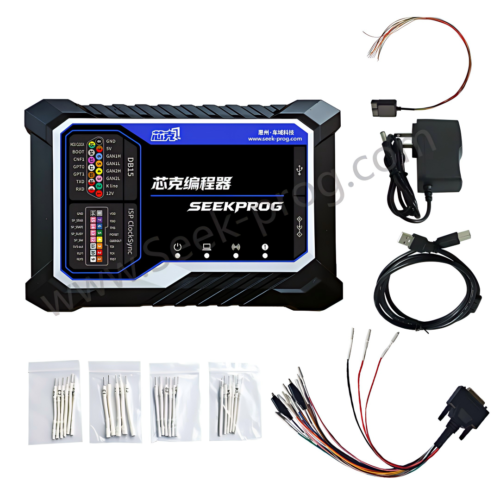
The KT200II ECU Programmer supports professional ECU reading, writing, backup and cloning operations on supported applications.
Different programming methods can be selected according to ECU requirements through:
Check ECU Support Before Reading
Before reading ECU memory, technicians should confirm:
- Vehicle compatibility
- ECU type
- Memory structure
- Required programming method
The official KT200II Support List provides compatibility information for supported ECU applications.
Keep ECU Programming Software Updated
Modern vehicles continue to introduce new ECU architectures and software systems.
Updated programming software helps technicians maintain compatibility with newer control units.
The latest resources are available through:
Conclusion
ECU memory reading is a fundamental skill for professional automotive electronics technicians.
By correctly reading Flash and EEPROM data, creating reliable backups and following proper procedures, technicians can perform safer ECU repair, cloning and programming operations.
A professional ECU workflow combines accurate identification, reliable equipment and careful data management to achieve consistent repair results.